If you’re growing seedlings indoors, blue-spectrum lighting is essential for sturdy stem development and compact, strong plants. This guide compares five blue-leaning options to help you choose the right lamp for seed starting, whether you’re growing herbs on a kitchen counter or setting up a small grow tent. The selections favor efficiency, ease of use, and clear indications of who benefits most from each model.
Buyer-friendly summary table
| Product | Best For | Key Point |
|---|---|---|
| Compact spaces, cost-conscious growers | Energy-saving 12W replaces 150W incandescent | |
| AURAZIGLI Led Grow Lights (4 Heads) | Seed starting with adjustable brightness | Multi-head, timer, auto on/off |
| LED Grow Light, 5700K Full Spectrum (Single Head) | All growth stages, precise control | Full spectrum with 5 levels, 4 timers |
| Garpsen Grow Light (2 Heads) | Rich spectrum, flexible setup | 9 red, 4 blue, 7 warm white per tube |
| Miracle LED Blue Starter (100W Equivalent) | Budget seed starters, hydropone setups | Blue-focused with energy savings |
Miracle LED 4KK Professional Indoor Grow Light Bulb – 4000K Blue Spectrum

Best for compact spaces where blue light supports early seedling vigor with minimal energy use. The 12W LED replaces a 150W incandescent and keeps energy costs low while supporting late-stage leaf development with a warmer blue spectrum. Ideal for small kitchens, apartments, and basement starter beds where space is at a premium.
Who this is for: buyers seeking an inexpensive, space-saving blue-light option that still delivers meaningful seedling growth in a closed indoor environment. Caution: not a full-spectrum grow solution; use when blue light is a primary driver of early growth stages.
AURAZIGLI Led Grow Lights, 4 Heads Red Blue Plant Light

Best for seed starting and vegetative growth where a mix of red and blue light drives compact stems and sturdy leaves. The four-head design provides broader coverage and consistent blue output across the canopy. Includes 3 timing options and 10 dimmable levels to tailor intensity to plant stage.
Who this is for: gardeners who want a flexible, multi-head fixture with automated timing for busy schedules. Limitation: coverage might be best for smaller setups; very large trays may require additional fixtures for even spread.
LED Grow Light, 5700K Full Spectrum Clip Plant Lamp

Best for growers who want a broad, full-spectrum option that still emphasizes blue wavelengths for seedling vigor. This single-head lamp provides 60 LEDs (48 white, 8 red, 4 blue) with five brightness levels and four timer settings. It offers a good balance of usability and spectrum for year-round seedling care.
Who this is for: anyone needing a compact, plug-and-play grow light with adjustable timing and brightness. Caution: not a two-head system, so coverage may be narrower depending on plant tray size and distance from the foliage.
Garpsen Grow Light with Red Blue Full Spectrum (2 Heads)

Best for versatile setups where spectrum richness matters. Each head combines 9 red, 4 blue, and 7 warm white LEDs, delivering a broader spectrum that supports varied growth stages from seed to bloom. Includes three lighting modes and five dimmable levels with an auto ON/OFF timer.
Who this is for: growers seeking a fuller spectral mix with easy automation for busy schedules. Caution: configuration requires understanding the three modes to maximize seedling outcomes.
Miracle LED Almost Free Energy 100W Growth Starter Blue LED Lamp
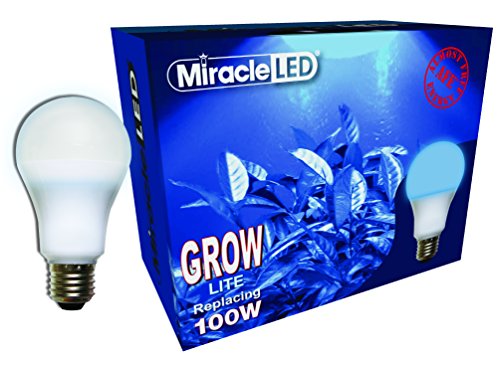
Best for budget seed starters and hydroponic enthusiasts who want a dedicated blue-light option to promote early stem strength. The 9W LED replaces a 100W flood light, delivering energy savings and a 475nm blue output that targets early growth stages. Useful in DIY horticulture projects where blue light is emphasized.
Who this is for: those needing a cost-effective, blue-light focus for seed germination and early development. Caution: not a full spectrum; pair with additional red or white light if later growth stages require broader illumination.
HIGROW LED Aquarium Blue Light Bulb

Best for dedicated blue wavelengths in small tanks or planter spaces where a compact blue bulb is preferred. This 18W bulb packs 18 blue LEDs (450-460nm) for a strong blue focus, suitable for seedlings and some aquatic plant setups. Good heat dissipation helps extend bulb life.
Who this is for: users needing a blue-dominant bulb for tight spaces, seedling beds, or aquariums. Caution: not a full-spectrum solution; consider supplementing with other colors for complete plant needs.
LED Grow Lights With Tripod Stand (Full Spectrum)

Best for flexible, adjustable setups where a full spectrum plus blue emphasis can be tuned for seedling growth. The tripod stand extends up to 63 inches and the 4-head design allows independent control. Includes 4/8/12/18-hour timing and a remote for convenience.
Who this is for: growers seeking a high degree of adjustability and coverage for a variety of seed trays and plant species. Caution: may be more than what a small desk setup needs; consider space and power availability.
Uallhome 2 Pack LED Grow Light Panels

Best for larger seedling setups and small grow tents where continuous performance across full spectrum is valuable. The 200W panel system delivers a balanced mix of UV, IR, red, blue, and white LEDs. Panels are easy to install and designed for year-round use in various indoor environments.
Who this is for: growers building a dedicated, all-purpose indoor garden with steady, year-round light. Limitation: higher upfront cost and setup space requirements compared with single-head solutions.
Buying Guide: Blue Light For Seedlings
What to look for when buying blue-light grow lamps
- Spectrum balance: Seedlings benefit from blue wavelengths (around 450–470 nm) to promote compactness and strong stems. Look for products that advertise blue intensity or a blue-dominant setting compatible with seedling stages.
- Wattage and efficiency: Higher wattage isn’t always better in blue-light focus. Compare lumen output and PAR values if available, and prioritize energy-efficient options to reduce operating costs.
- Coverage and layout: For seed trays, choose fixtures with enough spread or multiple heads to ensure even coverage. Adjustable stands or tripods help position the light at an optimal distance from the canopy.
- Timing and dimming: Timers and dimmable settings simplify daily care and avoid overexposure. Auto on/off features are especially helpful for busy schedules.
- Size and installation: Consider space constraints, whether you need a compact bulb, a clip-on fixture, or a panel system for a grow tent. Easy installation is a practical bonus.
How to position blue-light lamps for seedlings
- Start with a distance of about 6–12 inches for small seedlings and adjust as plants grow taller.
- Aim for a light cycle around 14–18 hours per day during the seedling stage, tapering to 12–16 hours as plants mature.
- Combine blue-light fixtures with additional red-spectrum light later to support flowering and stronger yields.
Maintenance and safety tips
- Keep fixtures clean to maintain light output and prevent overheating.
- Avoid touching LEDs directly after extended usage—allow cooling before handling.
- Check for uniform canopy coverage to prevent stretch or uneven growth.
Buyer questions (FAQ)
- What blue light wavelength is best for seedling growth? — Wavelengths around 450–470 nm are most associated with vigorous seedling stem elongation control and leaf development.
- Is full-spectrum lighting better than blue-only for seedlings? — Full spectrum supports all growth stages; blue light specifically aids early vegetative growth. A combination can be effective depending on setup.
- How many hours should seedlings be lit daily? — Generally 14–18 hours per day during germination and early growth, with adjustments as plants mature.
- Can I mix different brands of lights? — Yes, but ensure compatible intensity and timing to avoid conflicting light cycles or uneven coverage.
- Do blue lights save energy compared to white lights? — Blue-focused LEDs can be efficient due to targeted spectrum, but total energy use depends on wattage and efficiency of the fixture.
- When should I switch to red or full-spectrum lighting? — After the seedling stage, introduce broader spectrum lighting to support vegetative growth and flowering stages.