Answering the question: what are the best dethatcher attachments for tractors? This guide compares top 5 tow-behind dethatchers compatible with common riding mowers and tractors. Ideal for large yards, farms, or new lawn projects, these attachments remove thick thatch, improve airflow, and help seeds and nutrients reach the soil. Each option is best for different yard sizes, weight needs, and hitch setups. See the quick-comparison table below to choose the right fit for your equipment and lawn goals.
| Product | Working Width | Tine Type | Best For |
|---|---|---|---|
| AugFir 48-Inch Tow Behind Dethatcher | 48 inches | 20 spring steel tines | Large yards, wide coverage, weight-assisted penetration |
| BlumeTrec Tow Behind Dethatcher | 40 inches | 20 spring steel tines | Medium to large yards, easy attachment |
| Agri-Fab 45-0294 40in Tow Behind | 40 inches | 20 durable spring steel tines | American-made option, straightforward compatibility |
| Suchtale 48inch Tow Behind Dethatcher (24 tines) | 48 inches | 24 spring steel tines | Heavy thatch, deeper penetration |
| VEVOR Tow Behind Landscape Rake 60″ | 60 inches | 21 steel coil tines | Largest coverage, universal compatibility |
AugFir 48-Inch Tow Behind Dethatcher

The AugFir dethatcher is designed for large lawns with a 48-inch working width, enabling faster coverage through two rows of independently flexing tines. A heavy-duty carbon steel frame supports a 150 lb ballast tray, which helps tines penetrate deeply for thorough thatch removal. Height is adjustable via a two-position control handle, with an anti-slip stopper to prevent shifting during turns. Best for large courtyard gardens, golf courses, and farms that require deeper dethatching with fewer passes. Tip: Clean soil off tines after use to maintain performance.
Who it’s best for: homeowners with expansive lawns who want to minimize passes and maximize dethatching depth. Why selected: combines wide coverage with ballast-assisted penetration for consistent results. Limitation: heavier setup may require careful handling on uneven terrain or hills.
BlumeTrec Tow Behind Dethatcher

BlumeTrec offers a 40-inch dethatching width with 20 heat-treated, rust-proof spring tines. The universal pin-style hitch easily attaches to riding mowers, tractors, ATVs, or UTVs, and the wheel bearings provide higher load capacity for longer sessions. The two-row tine setup concentrates dethatching where it’s most needed, promoting better air, water, and nutrient penetration. Tip: avoid reversing while operating to maintain even contact with the lawn.
Who it’s best for: large yards needing efficient, wide-area dethatching with flexible mounting. Why selected: strong build, replaceable tines, and broad coverage. Limitation: assembly and setup take additional time, and improper operation can lead to uneven dethatching if pathing isn’t planned.
Agri-Fab 45-0294 40in Tow Behind Dethatcher
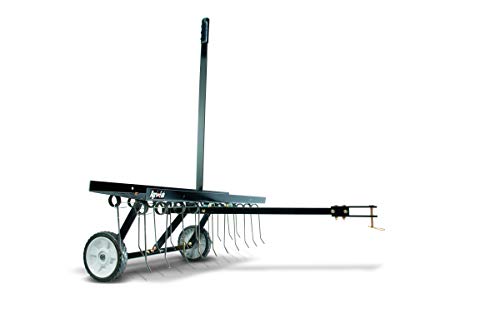
Agri-Fab’s 40-inch dethatcher features 20 durable spring steel tines designed to pull dead thatch from a 40-inch swath. U.S.A.-made, this option emphasizes reliable build quality and practical dethatching across standard lawn-sized tracts. Best for: traditional lawn tractors and garden tractors that need a simple, proven dethatching solution. Limitation: may require more passes on very thick thatch or uneven terrain compared to wider models.
Why selected: a balance of durability and straightforward compatibility with common tractors. Better for smaller or mid-size lawns where maneuverability matters more than sheer width.
Suchtale 48inch Tow Behind Dethatcher (24 tines)

This Suchtale model uses 24 spring steel tines across a 48-inch width for deeper, more aggressive thatch removal. The frame is reinforced for durability, and the ballast tray allows up to 70 lbs of weight to increase penetration depth. Wheels with bearings aid in maneuverability around obstacles. Tip: clean soil residue after use for consistent results.
Who it’s best for: property owners with thick thatch and larger lawns who want stronger digging action. Why selected: higher tine count delivers deeper dethatching, which is helpful for fall cleanup or heavy thatch buildup. Limitation: heavier ballast can require more effort to attach and maneuver on uneven ground.
VEVOR Tow Behind Landscape Rake (60″)

The VEVOR 60-inch landscape rake is designed for maximum coverage with 21 steel coil tines. It works with 48″ or 60″ toolbars and three-point suspension systems, making it a flexible option for various tractors and ATVs. The wide width makes it ideal for extensive lawns or fields, while removable or replaceable tines simplify maintenance. Best for: large properties needing fast, wide dethatching and debris collection. Caution: ensure compatibility with your three-point hitch and toolbar before purchase.
Buying Guide
What should you consider when choosing a dethatcher attachment?
- Working width: Wider models cover more ground but can be harder to maneuver in tight spaces. Match width to your lawn size and equipment capability.
- Tine design: Spring steel tines are common; more tines often mean deeper thatch removal but may require more care when reversing or steering.
- Weight and ballast: Heavier ballast improves penetration in thick thatch but adds load to the hitch. Ensure your tractor can safely handle ballast.
- Hitch compatibility: Check universal pin, three-point hitch, and toolbar compatibility. Some units attach to riding mowers, ATVs, or UTVs.
- Durability and maintenance: Look for rust-resistant materials and replaceable tines to extend lifespan. Clean tines after use to prevent buildup.
- Best-use scenarios: For thick thatch, prioritize models with higher tine counts or ballast options. For regular maintenance, a lighter, wider model may suffice.
Common scenarios
- Large, flat lawns: A 48–60 inch dethatcher with ballast is efficient for quick coverage.
- Medium lawns with moderate thatch: A 40–48 inch model with 20 tines balances ease of use and effectiveness.
- Heavy thatch and professional applications: A 48–60 inch unit with 24 tines and robust frame provides deeper penetration.
Maintenance reminders
- Clean soil from tines after each use to prevent rust and wear.
- Inspect tines for bending or breaking and replace as needed to maintain performance.
- Check ballast distribution to ensure even tine contact with the ground.
FAQ
- What width should I choose for a small yard? A 40-inch dethatcher is typically easier to maneuver and sufficient for small to mid-size lawns.
- Do dethatchers damage healthy grass? When used with proper depth settings and in the correct season, they remove thatch without harming healthy roots. Avoid aggressive use on stressed turf.
- Can I use a dethatcher on wet grass? It’s better to dethatch when the lawn is dry for more effective thatch removal and to prevent clumping.
- Do I need ballast? Ballast helps tines penetrate thicker thatch but adds weight. Start light and increase gradually as needed.
- Are universal hitch models compatible with most tractors? They are designed for broad compatibility, but always verify hitch type, width, and toolbar compatibility before purchasing.
- Is professional installation required? Most dethatchers are designed for DIY installation with standard tool sets and simple assembly steps.