When weeds threaten your lawn or garden beds, the right weed puller can save your back and speed up yard work. This guide highlights five top options—ranging from classic stand-up pullers to 2-in-1 rake-and-hoe designs—tailored for different weeding needs. Best for back-friendly weeding, large weed patches, or deep-root removal, these tools help you pull weeds at the roots without unnecessary bending. The following picks are suited for busy homeowners, casual gardeners, and DIY landscapers seeking durable, low-maintenance solutions.
| Product | Brand | Why It’s Notable |
|---|---|---|
| NICOFPHY Weed Puller Tool with Long Handle | NICOFPHY | 2-in-1 design with long handle; deep-root weed pulling; adjustable length |
| SIXCAR Weed Remover Tool | SIXCAR | Portable, all-steel, four-tooth design for precision and durability |
| Orelex Weed Puller Tool | Orelex | Stainless steel with solid wood handle; lever action for easy root removal |
| Grampa’s Weeder | Grampa’s Weeder | Classic stand-up design with bamboo handle and long-standing heritage |
| Fiskars Ergo Weeder Tool | Fiskars | Ergonomic handle and leverage-focused head for tough weeds |
NICOFPHY Weed Puller Tool With Long Handle

The NICOFPHY weed puller combines a 2-in-1 design: a six-tine rake for deep-soil weed extraction and a sharp hoe edge to cover larger areas. The long handle adjusts from 16″ to 60″, allowing users to weed while standing. This tool is best for gardeners seeking a single, versatile solution that reduces bending and supports extended sessions. The head is welded cast steel for durability, resisting rust and deformation. Use caution around children and pets, as the tool head is sharp and sturdy.
- Best for: deep-rooted weeds and users who prefer a 2-in-1 tool with adjustable length.
- Why selected: robust cast steel head and long reach minimize kneeling.
- Limitation: the sharp edges require careful handling around kids and pets.
SIXCAR Weed Remover Tool

The SIXCAR weed remover is a portable, all-steel unit designed for close-range precision. Its four-tooth head targets weeds with minimal soil disruption, and the durable handle is crafted for comfortable grip. This tool excels for gardeners who need a lightweight option with reliable steel construction. It’s well-suited for small to medium yard tasks and frequent use in tighter spaces.
- Best for: precision weeding in tight spaces and portable use.
- Why selected: all-steel durability with a comfortable, durable handle.
- Limitation: may require more manual effort for very deep-rooted weeds compared to longer-handle designs.
Orelex Weed Puller Tool
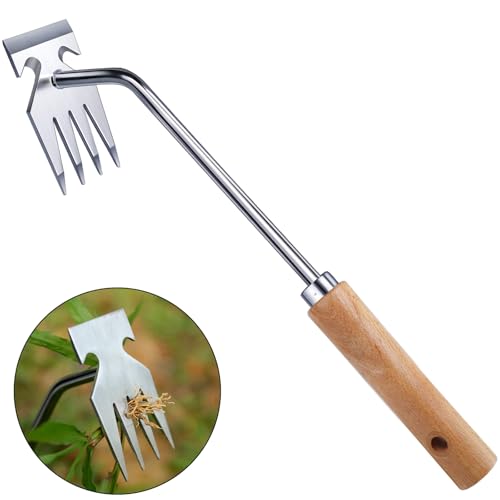
The Orelex weed puller uses a stainless-steel construction and a solid wood handle for a sturdy grip. Its lever design helps remove weeds by the roots with less strain, making it a strong choice for gardeners who value rust resistance and a smooth finish. The tool is especially effective for removing common stubborn weeds such as thistles, dandelions, and crabgrass, offering durable performance over time.
- Best for: rust-resistant stainless steel with a smooth, long-lasting finish.
- Why selected: ergonomic lever action reduces effort and improves root removal.
- Limitation: impact depends on soil conditions; very rocky soil may require additional leverage.
Grampa’s Weeder

Grampa’s Weeder is the original stand-up weed puller with a long bamboo handle and a four-claw steel head. This design emphasizes a simple, effective approach—lift weeds by the roots without bending. It has a long-standing reputation and is best for traditionalists who prefer a dependable, non-mechanized solution. Be aware that proper instructions should be followed to maximize effectiveness and prevent tool misuse.
- Best for: classic stand-up weeding with a proven track record.
- Why selected: heritage design that minimizes bending and pressure on the back.
- Limitation: can be slower for very large weed patches compared to 2-in-1 or heavier-duty tools.
Fiskars Ergo Weeder Tool

The Fiskars Ergo Weeder focuses on leverage and ergonomics, featuring a cast-aluminum head designed for powerful uprooting and a SoftGrip handle for comfort. This tool shines in tough soil and when pulling dandelions or thistles. It’s best for gardeners who prioritize precise control and long-term comfort during extended weeding sessions.
- Best for: users needing strong leverage with an ergonomic grip.
- Why selected: durable aluminum head and comfortable handle reduce fatigue.
- Limitation: aluminum head, while corrosion-resistant, can show wear with heavy use in very rocky soil.
Buying Guide: What To Consider When Choosing A Weed Puller
- Weed type and root depth: If you regularly battle deep-rooted weeds, a 2-in-1 tool or a long-handled puller with a strong head is preferable.
- Back and knee comfort: Stand-up designs reduce bending; adjustable-length handles extend reach for tall users or hard-to-reach beds.
- Head material and durability: Cast steel or hardened stainless steel heads resist deformation and rust; consider maintenance needs.
- Ergonomics and grip: Soft grips and balanced weight minimize fatigue during longer weeding sessions.
- Soil conditions: Rocky or clay soils may demand sturdier construction and leverage advantages.
- Size and storage: Compact tools fit small sheds; consider hanging holes for easy storage.
FAQ
- What is the best weed puller for deep-rooted weeds? A tool with a sturdy head (cast steel or stainless) and a long handle, like the 2-in-1 designs, helps reach and pull roots effectively.
- Are stand-up weed pullers worth it for small gardens? Yes. They reduce bending, making weeding faster and more comfortable for limited spaces.
- Which material lasts longer in outdoor conditions? Cast steel and stainless steel heads with rust-resistant finishes tend to last longer than basic carbon steel in moist environments.
- How do I maintain a weed puller? Rinse after use, dry thoroughly, and store in a dry area. Some models benefit from light oiling on metal parts to prevent rust.
- Can these tools remove all types of weeds? They’re effective for many common garden weeds, especially those with shallow or moderately deep roots; very stubborn or intertwined roots may require repeated efforts or additional tools.
- Do these tools require assembly? Most are designed for quick setup, but read the instruction manual for proper assembly and safety.