When choosing pest-control granules, you want a product that targets common yard and houseplants pests, provides lasting protection, and is easy to apply. The top picks below suit homeowners, renters, and gardeners seeking reliable outdoor protection, barrier effects, or systemic plant protection. This guide compares five notable granule products by coverage, pests addressed, and practical usage notes to help you pick the right option for your space.
Summary of selected products
- Ortho BugClear Lawn Insect Killer Granules (10 lb) — best for mid-size lawns up to 16,500 sq ft; fast-acting, long ant control.
- BioAdvanced Complete Brand Insect Killer Granules (10 lb) — best for broader pest coverage and soil & surface insects; up to 3 months protection.
- Ortho BugClear Lawn Insect Killer Granules (20 lb) — best for large lawns up to 33,000 sq ft; similar protection as the 10 lb version.
- GranuCide Cedar Granules — best natural deterrent; cedar aroma offers chemical-free pest management for yards and patios.
- Bonide Systemic Houseplant Insect Control Granules (8 oz) — best for indoor/outdoor plants needing systemic protection; long-lasting within plants.
Ortho BugClear Lawn Insect Killer Granules (10 lb)

Best for medium to large lawns needing long ant control and fast action. The granules provide up to six months of ant control (excluding pharaoh, carpenter, and harvester ants) and three months of residual protection against listed pests. Apply when activity is noticed, water in to activate. Suitable for lawns, ornamental beds, and perimeters. Choose this if you want a robust barrier that minimizes frequent reapplication.
Who this is for: homeowners with active ant problems and lawn pests who prefer a ready-to-spread granule with quick start-up. Limitation: does not cover certain ant species and requires watering to activate.
BioAdvanced Complete Brand Insect Killer Granules (10 lb)

Best for those seeking broad-spectrum, soil-and-surface insect control with a single product. This granule formula targets surface insects and subsurface pests, including grubs and ticks, with up to three months of protection. It also claims effectiveness against mosquitoes and multiple outdoor pests when used as directed. Use with a broadcast or drop spreader for even coverage.
Who this is for: gardeners needing both surface and soil pest suppression across lawns and plantings. Limitation: active protection period is limited to about three months; follow-up applications may be needed for ongoing issues.
Ortho BugClear Lawn Insect Killer Granules (20 lb)

Best for very large lawns or spaces requiring extended protection with similar pest targets as the 10 lb version. Provides up to six months of ant control and three months residual protection, acting quickly after application and watering in. Suitable for home perimeters, flower beds, and edible landscaping when used as directed.
Who this is for: homeowners with extensive lawn areas needing long-lasting control and a familiar, easy spread. Limitation: bigger bags may demand more storage and careful handling to ensure even coverage.
GranuCide Cedar Granules (8 lbs)
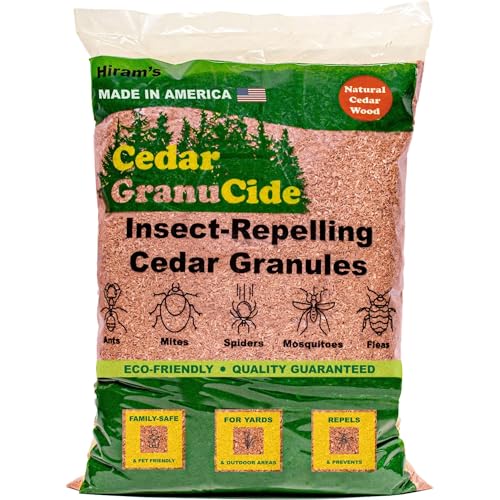
Best for organic or fragrance-friendly pest deterrence. Cedar granules emit a natural aroma that deters mosquitoes, ants, spiders, and other yard pests. They are 100% natural cedar and can be sprinkled in garden beds, yards, patios, and perimeter areas. Use as a longer-lasting alternative to sprays and oils where chemical exposure is a concern.
Who this is for: households seeking a natural repellent option with pet-friendly and family-safe materials. Limitation: cedar aroma may not provide as strong a kill as chemical granules and effectiveness varies by environment.
Bonide Systemic Houseplant Insect Control Granules (8 oz)

Best for containerized houseplants and potted arrangements needing internal protection. This granular, systemic formula is absorbed by roots and moves through the plant for up to eight weeks of protection. It targets pests that feed on plant tissues, such as aphids and mealybugs, without affecting non-feeding insects.
Who this is for: indoor gardeners and plant owners who want ongoing protection without frequent misting. Limitation: systemic action means results depend on plant uptake and may not give immediate surface-kill effects.
Buying Guide: Key Considerations for Granule-Based Pest Control
- Coverage area: Calculate your space to choose the right bag size (e.g., 10 lb covers roughly up to 10,000–16,500 sq ft depending on product).
- Pests targeted: Decide between surface-only, soil-insect, or systemic plant protection based on pest type and location.
- Application method: Spreader compatibility and ease of use are crucial for even distribution.
- Active duration: Consider whether you need months of protection or more frequent applications for high-damage seasons.
- Environmental impact: Natural cedar granules offer fragrance-based deterrence but may be less immediately potent than synthetic formulas.
- Safety and plant tolerance: For homes with pets or children, prefer formulations designed with reduced odors and lower toxic exposure.
Frequently Asked Questions
- What is the main difference between surface and systemic granules?
Surface granules act on insects that contact or feed on treated surfaces, while systemic granules are absorbed by plants and provide protection from the inside out. - How long does protection last after applying granules?
Protection duration varies by product, typically from 2–6 months depending on pests and weather conditions. - Do I need to water in granules?
Many lawn granules require watering to activate the active ingredients and ensure soil penetration or surface distribution. - Are cedar granules safe for pets?
Cedar granules are generally considered low-toxicity and natural, but always supervise pets and follow product directions for outdoor use. - Can I use multiple products together?
It is best to avoid mixing products unless explicitly recommended by the manufacturer to prevent adverse interactions. - Will granules harm beneficial insects?
Some granules target a broad range of pests; to minimize impact on beneficial insects, apply with precise coverage and avoid flowering plant zones when possible.