Are you looking for a reliable moisture reader to prevent overwatering and keep houseplants and outdoor beds thriving? This guide highlights five top-performing soil moisture meters that help you interpret root-zone moisture levels without guesswork. These tools are ideal for indoor plant lovers, balcony gardeners, and small-farm hobbyists who want clear, actionable readings. Each option below is selected for accuracy, ease of use, and durability in real-world settings.
Product Overview at a Glance
| Product | Best For | Key Benefit | Notes |
|---|---|---|---|
| XLUX Soil Moisture Meter (2015) — Durable 304 Stainless Probe | Beginner to intermediate indoor/outdoor plants | Accurate root-zone readings, battery-free | Reliable long-term option |
| XLUX Long Probe Deep Use Soil Moisture Meter | Deep pots and large plants | 5.5-inch probe reaches bottom of pots | Quick, immediate readings |
| XLUX Long Probe Deep Use 2 Pack | Multiple pots or zones | Two meters for simultaneous checks | Same features as single Pro model |
| Censinda No-Battery Soil Moisture Meter | Low-maintenance indoor/outdoor basics | No battery required | Simple, fast readings |
| Antonki 2 Pack Soil Moisture Meter | Casual home garden, multiple beds | Color-coded dial, quick readings | No batteries needed |
XLUX Soil Moisture Meter (2015) — Durable 304 Stainless Probe
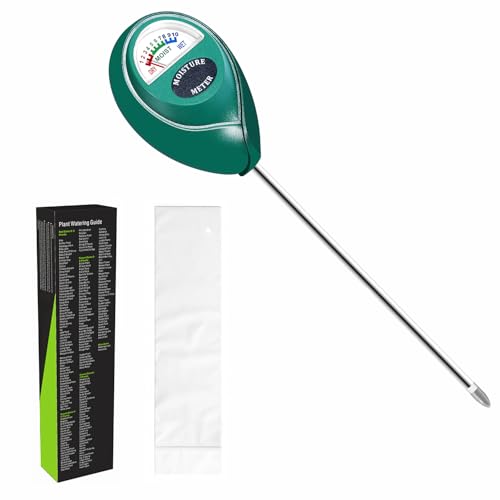
Best for: Gardeners who want a dependable, battery-free meter that works across indoor pots and outdoor beds. This model has established reliability since 2015 and is trusted by many plant lovers for consistent readings.
The meter measures moisture deep in the root zone, not just the surface, giving you a true picture of whether to water. The user-friendly dial displays 10 scales spanning Dry to Wet, with color-coded zones for quick interpretation. It requires no batteries or charging, making it a practical all-season tool for busy households.
Why chosen: It combines long-standing reliability with straightforward use. The 304 stainless steel probe resists corrosion and provides durable performance in varied soil types. A potential limitation is that, like other analog meters, it relies on soil contact and can benefit from periodic calibration checks for very light or sandy soils.
XLUX Long Probe Deep Use Soil Moisture Meter

Best for: Large pots and deep-rooting plants where standard meters miss bottom-zone moisture. The extended 5.5-inch probe reaches the bottom of deep pots to prevent under- or over-watering.
What it does: The large dial remains easy to read, with three zones and ten scales for precise interpretation. Immediate readings help you decide if watering is needed right away. Caution: Do not leave the probe in soil for more than five minutes to reduce corrosion risk of the metal tip.
Why chosen: Its extended probing depth makes it superior for big planters, raised beds, or outdoor pots where root zones are deeper. Best for: homeowners who rotate plants across seasons and need consistent bottom-layer measurements.
XLUX Long Probe Deep Use 2 Pack

Best for: Gardeners managing multiple pots or zones at once, with a need for parallel readings. This two-pack provides similar depth and speed as the single long-probe model.
What it does: Each meter features a 5.5-inch probe and a large dial with color-coded scales, offering immediate moisture readings. Limitations: As with any non-electronic meter, readings can drift slightly with extreme soil conditions; rotate among pots to verify consistency.
Why chosen: A cost-effective way to monitor several plants at once, reducing guesswork when watering a small collection of containers or different garden beds.
Censinda Soil Moisture Meter — No Battery Needed
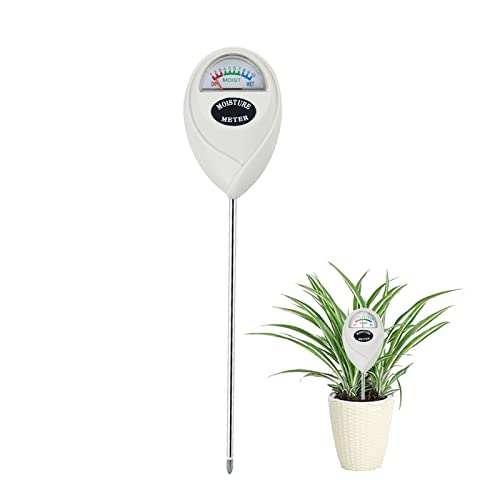
Best for: Quick-checks for houseplants and outdoor adornments where simple, battery-free operation is preferred. The meter offers fast readings without any power requirements.
What it does: It probes into the root zone to indicate dry, moist, or wet conditions. The absence of batteries makes it a low-maintenance option for casual gardeners. Caution: Some users may find the plain dial less precise in very dry or very wet soils; use as a quick reference rather than a sole watering guide.
Why chosen: No-battery meters appeal to minimal-maintenance setups and beginners who want straightforward results without extra upkeep.
Antonki 2 Pack Soil Moisture Meter

Best for: Home gardeners who want quick, color-coded moisture readings across multiple pots or garden sections. The two-pack allows simultaneous checks for different zones or beds.
What it does: The meter quickly reports whether soil is dry, moist, or wet via a color-coded dial and 10-scale system. It requires no batteries, aligning with simple, everyday plant care. Limitation: As with analog meters, readings can vary with soil texture; ensure proper soil contact for consistency.
Why chosen: A practical option for households seeking straightforward moisture guidance with minimal maintenance and multiple meters for broader coverage.
Buying Guide: How To Choose The Right Moisture Meter For Plants
- Reading depth vs. pot size: Choose a meter with a longer probe (about 5.5 inches) if you regularly water large pots or deep soil beds. Short probes may miss root-zone moisture in larger containers.
- Battery-free vs. battery-powered: Battery-free meters offer low-maintenance operation, but electronics-based meters can provide more data, like soil temperature or pH in some models. Align with your preferred maintenance level.
- Dial readability: Look for large, high-contrast dials with clear color zones (Dry, Moist, Wet). This makes quick decisions easier, especially in low-light conditions.
- Multi-meter options: If you care for several plants or zones, consider a multi-pack to monitor different beds simultaneously and ensure even watering across your garden.
- Material durability: Probes with stainless steel or corrosion-resistant tips withstand repeated insertions in various soils, reducing wear over time.
- Calibration and limitations: Analog meters depend on soil contact; sandy or very dense soils can affect readings. Use as a guide in conjunction with observation of plant appearance and soil moisture feel.
- Best uses by plant type: For tropical houseplants with shallow roots, a standard probe suffices. For cacti or drought-tolerant species, monitor soil surface more carefully and rely on the meter’s readings for the root zone as needed.
Frequently Asked Questions
- Do moisture meters require batteries? Some models are battery-free and rely on a mechanical dial, while others use batteries for digital readings. Choose based on your preference for simplicity or more data features.
- How deep should I insert the probe? Insert until you reach resistance or near the root zone; avoid forcing the probe past compacted soil to prevent damage.
- Can moisture meters replace plant observation? No. They are tools to guide watering, not a sole determinant. Use alongside plant condition cues like leaf wilting or yellowing.
- How often should I check soil moisture? For potted plants, check when you notice signs of stress or after watering. For outdoor gardens, check as part of your regular irrigation plan, especially in hot weather.
- Are digital meters more accurate than analog? Digital meters can offer additional data (temperature, pH) and may be more precise in some conditions, but high-quality analog meters provide reliable root-zone insight with simplicity and durability.
- What’s the best practice for multiple meters? Use one meter per zone or per large pot, and compare readings across meters during watering to ensure consistency in care.