If you’re looking to attract bluebirds, wrens, chickadees, and other small cavity-nesting birds, a sturdy nesting box is essential. This guide highlights five reliable options that balance safety, durability, and ease of use. Each product is well-suited for different backyard setups and animal guests. Read on to compare features, ideal buyers, and practical tips for choosing and placing nesting boxes to maximize nesting success and enjoyable bird watching.
Product Quick Comparison
| Product | Key Benefit | Best For |
|---|---|---|
| SISTERBIRD 2 Pack Bird Houses for Outside | Copper predator guard; cedar construction | Bluebird and small songbird nesting in moderate climates |
| 2 Pack Bird Houses for Outside, Bluebird Nesting Box | Metal predator guard; built for outdoor use | Bluebirds, chickadees, wrens, swallows |
| Bird Houses for Outside with Metal Predator Guard | Carbonized wood; predator guard | Bluebirds and multiple small species; easy to clean |
| 2 Pack Bird Houses for Outside – Cedar Bluebird Houses | 1.5″ entrance; predator guard | Bluebirds, wrens, finches |
| PINVNBY Parakeet Nesting Box | Top hinged lid; sturdy arced design | Parrots, lovebirds, small to medium birds |
SISTERBIRD 2 Pack Bird Houses for Outside Clearance

The SISTERBIRD set includes two cedar bird houses with a copper predator guard around the entrance, designed to reduce predation while providing a natural, untreated cedar interior. The 1-1/2″ entrance hole targets bluebirds and several small songbirds, including wrens and chickadees, while discouraging larger cavity nesters. The rough cedar surface offers birds a secure foothold. Best for buyers seeking a traditional cedar look with predator protection in temperate climates.
- Best for bluebirds and small songbirds needing a sheltered, predator-protected space.
- Limitations: No built-in ventilation ports beyond interior grooves; spacing for mounting is not specified.
2 Pack Bluebird Nesting Boxes With Metal Predator Guard

These wooden birdhouses are built for outdoor use with natural wood and a metal predator guard. The 1-1/2″ entrance hole remains ideal for bluebirds, chickadees, wrens, swallows, and finches. Ventilation holes on the top and bottom improve airflow, helping keep nests dry. An interior wire mesh and grooved front panel assist fledglings in reaching the entrance. Best for buyers who value built-in safety features and ventilation for all-season use.
- Better for households wanting explicit ventilation and an interior safety ladder.
- Caution: Assembly is required; ensure proper mounting height and placement for predator protection.
2 Pack Cedar Bluebird Houses With Predator Guard
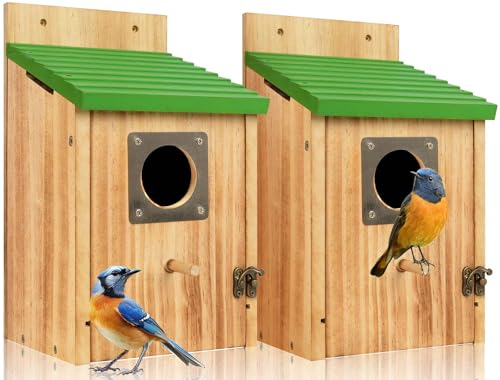
These cedar birdhouses feature a 1.5″ entrance and a metal predator guard, offering a robust nesting option for bluebirds, wrens, and finches. Cedar wood resists weathering well and blends into most garden settings. A clear highlight is the 5.7 x 5.7 x 10.2 inch footprint, which provides comfortable internal space for small birds. Best for buyers who want a classic look with predator protection and easy outdoor maintenance.
- Choose this if you prefer durable cedar that ages gracefully outdoors.
- Limitation: Assembly is required; ensure the guard is securely mounted to deter larger predators.
PINVNBY Parakeet Nesting Box

The PINVNBY nesting box is designed for parrots and larger small birds with a top hinged lid for easy monthly cleaning and bedding changes. It features a safe round entrance to protect from wind and predators and a perching ledge for birds to rest. Best for buyers with lovebirds or budgies and who want a simple, accessible cleaning process. Caution: The box’s capacity may be better suited to medium-sized birds rather than larger parrots.
- Best for parrot families needing straightforward access and a sturdy perch.
- Limitation: Some birds may prefer darker interiors; consider a removable divider for easier maintenance.
Buying Guide: Key Considerations For Nesting Boxes
What size entrance is right for your birds?
Most small cavity nesters do well with 1-1/2 inch entrances. If you aim to attract bluebirds or wrens, this size is typically ideal. Larger holes may invite unwanted visitors or predators. Consider a predator guard to reduce predation risk.
What material matters?
Untreated cedar is common for outdoor boxes due to its natural rot resistance and aesthetic. Carbonized wood and natural pine offer different textures and protection, but ensure outdoor suitability and avoid hazardous finishes that may harm birds. A cedar or pine box with a copper or metal guard is a solid baseline.
Ventilation and cleaning features
Boxes with ventilation holes reduce humidity and help keep nests dry. A top-hinged lid or removable panel makes cleaning after nesting season easier and encourages reuse. Look for interior grooves or ladders that help fledglings exit safely.
Placement and mounting tips
Mount boxes at appropriate heights (typically 5–12 feet, depending on local predators). Use predator guards or predator-resistant hardware. Face boxes away from prevailing winds and ensure there’s a clear flight path to the entrance. Grouping two or more boxes can attract multiple species but space them to reduce competition.
Which box fits your backyard setup?
Assess climate, predator presence, and the target species. If you want a traditional cedar look with predator protection, a two-pack cedar option may suit most backyards. For easier monitoring, consider a box with a transparent panel or internal access features that allow quick checks without disturbing nesting birds.
Frequently Asked Questions
- What size entrance hole should I choose for bluebirds? A 1-1/2 inch entrance is standard and suitable for bluebirds and several small songbirds.
- Do nesting boxes require maintenance? Yes. Regular cleaning after nesting season helps prevent parasites and disease. Use a mask and gloves and avoid disturbing active nests.
- Are predator guards necessary? Predator guards are highly recommended in areas with squirrels or other predators to protect nests and fledglings.
- Can I hang multiple boxes next to each other? Yes, but space them adequately to minimize competition and ensure safe access for fledglings.
- What materials are safest for birds? Untreated cedar, natural pine, and other non-toxic woods are generally safe. Avoid treated woods with chemical coatings near nesting sites.
- Should I observe nesting birds? Brief, non-intrusive observation is acceptable. Use a transparent or removable panel if you want to monitor without frequent disturbance.