Answer: For deer fencing, use heavy-duty U-channel metal fence posts that resist bending, corrosion, and weather wear while supporting secure wire or mesh runs. The top picks below are best for different yard sizes and fence heights, with clear guidance on who each product is right for. If you’re fencing a garden, a farm perimeter, or a temporary boundary, these posts help keep deer out without frequent maintenance.
Buyer-friendly summary table of selected products:
| Product | Length | Best For | Notes |
|---|---|---|---|
| VEVOR 7 Feet U-Channel Metal Fence Post (10 Pack) | 7 ft | Medium to large yards, permanent fencing | Includes zip ties and clips; strong Q235 steel |
| VEVOR 6 Feet Fence Post (10 Pack) | 6 ft | Smaller yards, light to medium fencing | Same construction; slightly shorter |
| Toriexon 16 Pack 7 ft Green Posts | 7 ft | Temporary or flexible layouts | No-dig design; adjustable tabs |
| Gtongoko 10 Pack 5 ft Fence Posts | 5 ft | Smaller enclosures, garden borders | Anchor plate; no-dig option |
| CLEASO 20 Pack 5 ft Black Posts | 5 ft | Large installations, rapid setup | No-dig, pre-welded tabs |
VEVOR 7 Feet U-Channel Metal Fence Post, 10 Pack

Best for: medium to large fenced areas where a sturdy, long-lasting post is needed. These 7-foot posts are designed to resist bending and support lengthier fence runs. The 2 mm thick Q235 carbon steel offers high rigidity, and a powder-coated finish adds UV and corrosion protection for outdoor reliability.
Why selected: The one-piece construction plus riveted joints contribute to a stable structure. The U-channel design improves bending resistance, making it suitable for deer barriers in wind-prone areas. Includes 10 posts, plus 50 zip ties and 20 clips to get started.
Limitations: Slightly heavier to install than lighter aluminum options; best with a proper post driver or hammer for quick placement.
VEVOR 6 Feet Fence Post, 10 Pack

Best for: smaller or tighter fence footprints where 6-foot posts fit the space without sacrificing stability. Similar construction to the 7-foot version with the same durable 2 mm steel and protective coating.
Why selected: The shorter length suits compact yards or perimeter gardens. U-channel design offers strong resistance to bending, and anchor plates add ground stability for a dependable deer barrier.
Caution: Shorter posts may require more precise spacing to achieve uniform tension on the fence line.
Toriexon 16 Pack 7 FT Posts

Best for: temporary or flexible fencing setups where quick, no-dig installation matters. These 7-foot posts provide robust support and are suitable for larger temporary enclosures or seasonal deer barriers.
Why selected: Heavy-duty 0.08″ steel and an adjustable tab design enable easy attachment and secure alignment of rolled fences. The U-channel helps resist bending, and the anchor plate enhances ground stability.
Limitation: As a larger pack, installation may require more planning to ensure posts stay evenly aligned across long runs.
Gtongoko 10 Pack 5 ft Posts

Best for: small to medium gardens or yard boundaries where a shorter post size still delivers solid deer protection. At 5 feet, these posts are easy to handle and install in constrained spaces.
Why selected: 14-gauge steel and a welded anchor plate deliver stable ground grip. No-dig design with a pointed bottom allows quick installation using a hammer or post driver, reducing setup time for DIY projects.
Limitation: Shorter posts may limit fence height or tensioning options for taller fences in windy areas.
CLEASO 20 Pack 5 ft Posts
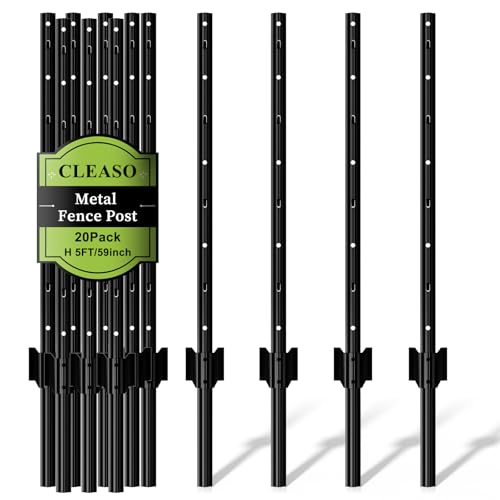
Best for: expansive fencing projects, where many posts are required quickly. The 5-foot length is versatile for standard low-to-mid-height deer barriers across larger yards or farm boundaries.
Why selected: Rustproof powder-coated steel and no-dig post anchors allow fast, repeatable installations. Pre-welded tabs hold wire tight, helping maintain a taut fence line that deters deer attempts to push through.
Limitation: The no-dig design is best when the soil is reasonably firm; extremely rocky ground may still require alternative anchoring methods.
Buying Guide
What length should I choose?
Choose length based on fence height and area. 5–6 feet works well for low-to-mid-height fences in level yards; 7 feet adds extra margin for deer barriers in exposed locations or taller fencing needs.
What material features matter?
Look for thick steel (2 mm or thicker) and a U-channel design to resist bending. Powder-coated finishes provide weather resistance and longer life in outdoor settings.
No-dig installation: is it right for me?
No-dig posts are ideal for quick setups and temporary layouts, especially in softer soils. In rocky or frozen ground, plan for additional anchoring or alternative methods.
How important are anchor plates?
Anchor plates improve ground grip and overall stability, especially for longer runs or harsh wind environments around deer fences.
What about inclusion of accessories?
Posts that come with zip ties, clips, or pre-welded tabs save time and reduce extra purchases. Ensure compatibility with your specific fencing material (wire, mesh, or netting).
Durability versus ease of use
Higher durability may require more effort during installation, but it pays off with fewer replacements. Balance your project’s budget against expected fence longevity and deer pressure in your area.
FAQ
- Q: Are these posts suitable for permanent deer fencing?
A: Yes. The posts shown use durable steel with protective coatings designed for long outdoor life and can support permanent fencing runs. - Q: Can I install these without digging?
A: Several options are no-dig or quick-install designs. No-dig posts are best for softer soils and easy reconfiguration, while others may require driver tools. - Q: Do the posts come with fence hardware?
A: Some sets include basic hardware like clips or ties, but check each product listing for exact contents. - Q: What is the best post length for deer fencing?
A: For most residential yards, 6–7 feet provides a good balance of strength and manageability, especially when combined with appropriate fencing material. - Q: How should I space posts for deer fencing?
A: Follow fencing manufacturer guidelines, commonly 6–8 feet apart for standard wire or mesh, adjusted for gate openings and terrain. - Q: Can I reuse these posts if I redesign my fence?
A: No-dig designs are easiest to relocate, but most steel posts can be removed and re-used with careful extraction and ground restoration.