If you’re dealing with heavy clay and compacted ground, these soil improvers are designed to improve structure, drainage, and root growth. They’re best for homeowners with clay-heavy beds, lawns that puddle after rain, or vegetable plots needing better aeration. The following products offer plant-based blends, mineral amendments, and liquid conditioners to ease installation and support healthier gardens.
Summary of chosen products:
| Product | Best For | Why It’s Recommended |
|---|---|---|
| Florasoul Clay Breaker Soil Amendment | Heavy clay gardens and lawns | Plant-based formula that softens clay, improves drainage, and is vegan-friendly. |
| MIGHTY109 Red Clay Potting Soil Amendment | Clay soil structure and moisture balance | Enhances soil structure, moisture retention, and root development. |
| Down To Earth All Natural Fertilizers Garden Gypsum | Loosening clay soil without pH change | Calcium sulfate softens clay; supports root growth; pH-neutral. |
| Espoma Organic Garden Gypsum Soil Conditioner | Clay soil loosening, pelletized ease | Pelletized gypsum; easy application; no additives. |
| Monty’s Premium Liquid Soil Conditioner | Liquid aeration for all soil types | Humic acids boost structure, moisture, and microbial activity. |
Florasoul Clay Breaker Soil Amendment
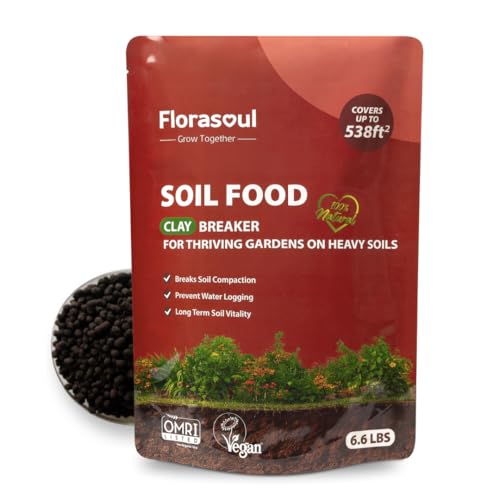
Best for: Home gardens and flower beds dealing with hard, compacted soil. This plant-based formula softens clay, making soil easier to work and allowing roots to penetrate more deeply. It also improves drainage and aeration by creating vital air pockets in dense soil. The vegan, seaweed-based composition makes it suitable for organic vegetable and flower gardening. A potential limitation is that results may depend on soil conditions and application frequency.
MIGHTY109 Red Clay Potting Soil Amendment

Best for: Clay-dominated soils where structure and moisture retention are needed. It improves soil elasticity and overall structure, supports healthier root systems, and helps soil retain hydration longer, reducing watering frequency. It’s a solid choice when you want stronger root establishment. A limitation is that performance can vary with extreme weather or pre-existing soil chemistry.
Down To Earth All Natural Fertilizers Garden Gypsum

Best for: Clay soils needing a calcium sulfate boost without pH change. This gypsum-based amendment loosens soil, improves aeration and drainage, and provides calcium and sulfur essential for strong cell walls and plant growth. It’s acid-neutral, making it safe for pH-sensitive plants. A caution is that gypsum works best when water is managed to prevent leaching in very sandy or poorly drained soils.
Espoma Organic Garden Gypsum

Best for: Clay soils that need loosening without altering pH and with easy application. This product uses 100% natural mined gypsum and is pelletized for simple spreading. It’s ideal for seasonal use and can be broadcast or surface-applied. A note is that results are gradual and depend on consistent application over time.
Monty’s Premium Liquid Soil Conditioner

Best for: All soil types needing rapid improvement of structure, moisture retention, and microbial activity. This liquid conditioner uses humic and organic acids to break down organic matter, improve soil structure, and enhance nutrient availability. It’s a convenient option for quick action and wide compatibility. A limitation is that some gardeners prefer solid amendments for long-term soil texture changes.
Buying Guide
What kind of clay soil are you treating? Identify whether your soil is heavy, dense, or compacted, as this guides the best choice among mechanical loosening (gypsum-based), organic amendments, or liquid conditioners.
Key purchase considerations
- Soil impact type: Gypsum-based products loosen clay without raising pH; plant-based and mineral blends add structure and nutrients; liquids offer quick, broad-spectrum improvement.
- Application complexity: Pelleted or granular products are easy to spread; liquid conditioners require measuring and may need more frequent reapplication.
- Long-term vs. short-term: Granular amendments tend to modify soil texture gradually; liquids provide faster results but may need ongoing use.
- Organic compatibility: If you garden organically, prioritize vegan, plant-based, or all-natural formulations with no synthetic additives.
- Water management: Clay soils benefit from improved drainage; consider pairing amendments with proper watering plans to avoid surface runoff or waterlogging.
Practical tips for choosing
- For stubborn clay with poor drainage, start with a gypsum-based product to loosen structure and improve aeration.
- For gardens with sensitive plants requiring pH stability, choose pH-neutral calcium-based amendments.
- If you prefer low-effort maintenance, consider a liquid soil conditioner that rapidly enhances moisture retention and microbial activity.
- Combine products sensibly: gypsum can be used with organic additives to balance structure and nutrition.
Comparison at a glance
- Best for quick results: Monty’s Premium Liquid Soil Conditioner
- Best for long-term texture change: Florasoul Clay Breaker Soil Amendment
- Best for root-driven improvement: MIGHTY109 Red Clay Amendment
- Best for pH-safe loosening: Down To Earth Gypsum
- Best for easy application: Espoma Garden Gypsum (pelleted)
Frequently asked questions
- Will gypsum change my soil pH? Answer: Gypsum is generally pH-neutral and does not significantly alter soil pH.
- How quickly will I see improvement in clay soil? Answer: Granular amendments often show gradual changes over weeks to months; liquids may appear quicker but need ongoing use.
- Can I use these products in vegetable gardens? Answer: Yes, several are suitable for organic vegetables, especially plant-based or mineral-based formulations.
- Do I need to test my soil before applying? Answer: Soil testing helps tailor amendments to your specific clay type and nutrient needs.
- Should I combine multiple products? Answer: It’s common to blend products to address structure, drainage, and nutrient needs, but follow label guidance for compatibility.
- Is there a risk of over-amending clay soil? Answer: Over-application can disrupt soil balance; apply per package directions and observe soil behavior after application.