Answer: A soil meter helps you monitor moisture, pH, light, and temperature to keep plants thriving. This guide highlights five top meters ideal for home gardeners, indoor growers, and outdoor beds. Best suited buyers include busy homeowners (easy-read meters), seasoned gardeners needing root-zone insight, and seniors who benefit from ergonomic designs.
Summary table of selected products
| Product | Best For | Key Benefit | Note |
|---|---|---|---|
| YAMRON 4-in-1 Soil Moisture Meter | All-around gardener | Monitors moisture, pH, temperature, and sunlight | Backlit LCD for day/night use |
| XLUX Long Probe Deep Use Soil Moisture Meter | Pot and garden with deep roots | Long 5.5-inch probe; immediate read | No battery required |
| SONKIR Soil pH Meter MS02 3-in-1 | Budget-friendly 3-in-1 | Moisture, light, and pH in one | No battery needed |
| Censinda Soil Moisture Meter | Indoor/outdoor houseplants | No battery; quick moisture reading | Simple, reliable, basic design |
| Raintrip 4-in-1 Soil Meter | Comprehensive plant care | Moisture, pH, nutrients, and light with rotating dial | Includes growing guide and extra accessories |
YAMRON 4-in-1 Soil Moisture Meter

This 4-in-1 tester measures soil moisture, pH, temperature, and sunlight. It helps you decide when to water, adjust soil acidity, and ensure sufficient light for photosynthesis. The large backlit LCD display aids readability in dim conditions, and the instrument is designed for gardening, farming, and outdoor plant care. Best for hands-on gardeners who want a single tool covering multiple needs, including light exposure assessment. A limitation is that battery operation is required, so keep spare AAAA batteries on hand for uninterrupted readings.
XLUX Long Probe Deep Use Soil Moisture Meter

This meter features a long 5.5-inch probe designed to reach the bottom of deep pots, providing an accurate reading of root-zone moisture. The large dial with ten-scale zones (Dry-Moist-Wet) is easy to interpret at a glance. It requires no batteries, making it a reliable, low-maintenance choice for indoor pots and outdoor garden beds. Best for deep-rooted plants and users who prefer a quick, battery-free read. Caution: avoid leaving the probe in soil for extended periods to prevent tip corrosion.
XLUX Soil Moisture Meter (Since 2015)
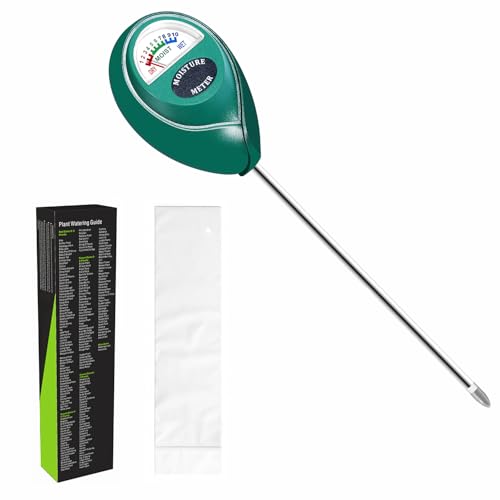
XLUX emphasizes reliability with a long track record and a robust 304 stainless steel probe. The device measures moisture without requiring batteries, providing an immediate reading that helps prevent overwatering. The 10-scale dial (Dry-Moist-Wet) is color-coded for quick interpretation. Best for growers who want a proven, battery-free option and clear root-zone insight. Limitation: not ideal for measuring pH or light—focuses primarily on moisture depth.
SONKIR Soil pH Meter MS02 (3-in-1)

This 3-in-1 tool tests soil moisture, pH, and sunlight, offering a compact solution for garden beds, lawns, and indoor setups. It requires no batteries, making it convenient for quick checks. Best for budget-conscious users who want a multi-function meter without ongoing costs. Caution: if the soil is too dry, the indicator may not move, so water lightly before testing for accurate results. Not suitable for testing liquids outside soil.
Raintrip 4-in-1 Soil Meter

Raintrip combines moisture, pH, nutrient level, and light sensors into one unit, delivering a comprehensive snapshot of plant needs. The 90° rotating dial design elevates ease of use by reducing bending or squatting to read data, which can benefit gardeners with limited mobility. Best for serious plant care where a single tool covers multiple variables. Limitation: more features can make it slightly more complex for simple, quick readings.
Buying Guide
- What should you measure first? For most beginners, soil moisture is the top priority, followed by light exposure to ensure adequate photosynthesis.
- Battery vs. battery-free: Battery-powered meters can offer additional features (pH, temp, backlight), but battery-free options reduce maintenance and costs.
- Probe depth: Deep-rooted plants require longer probes to measure moisture at the root zone. Consider pot depth and plant type when choosing.
- Accuracy and speed: Look for meters with immediate readings and clear, color-coded scales to avoid misinterpretation.
- Readability: Large dials and backlit displays are helpful for day and night use, especially in indoor setups or shaded areas.
- Durability: Stainless steel probes and splash-resistant housings improve longevity in outdoor conditions.
What features matter most for different buyers
- Busy homeowners: A 4-in-1 tool that reduces the number of devices needed and offers easy-to-read results.
- Indoor plant lovers: A compact, battery-free option with quick moisture readings to protect houseplants from overwatering.
- Outdoor gardeners: A long-probe meter and a robust dial scale help monitor deep soil in larger pots and garden beds.
- Beginner gardeners: Simple 3-in-1 meters with clear instructions and no battery requirements minimize setup friction.
Maintenance tips
- Clean probes after use to maintain accuracy and prevent residue buildup.
- Avoid leaving meters in soil for extended time to prevent corrosion on metal tips.
- Store meters in a dry place to prolong component life.
FAQ
- Do soil meters need batteries? Some models are battery-free, while others use batteries for pH, temperature, or backlighting.
- Can I use a soil meter on potted plants and garden soil? Yes, most meters work in both containers and in-ground beds, but check probe depth and calibration suitability.
- What is a 4-in-1 meter good for? It provides moisture, pH, temperature, and light readings in one tool, ideal for comprehensive plant care.
- Are there meters specifically for indoor plants? Yes, many compact meters are designed for indoor pots and terrariums with easy readability.
- How often should I check soil moisture? Check before watering; for sensitive plants, daily quick reads can help prevent overwatering.
- Can I rely on these meters for precise pH levels? They provide quick guidance and relative readings; for precise pH values, laboratory testing is recommended.