Sticky traps designed for thrips offer a simple, chemical-free way to monitor and reduce flying pests in indoor and outdoor settings. This guide highlights five top options to help hobbyists and professionals protect houseplants, gardens, and greenhouse crops. Each pick is chosen for its clarity of use, sturdiness, and effectiveness against thrips and other small flying pests. Use cases include indoor plant rooms, sunrooms, balconies, and small to medium gardens.
Summary of recommended products
| Product | Best For | Why It’s Selected |
|---|---|---|
| Seabright HGSLTLT Sticky Thrip Leafminer Trap | All-around protection, weather-ready | Long-lasting, weather-proof; attaches to plants without damage |
| Cleanuper 58 Pack Gnat Killer Sticky Traps | Quick catches in various rooms | Blue traps catch thrips on first contact; family-friendly |
| Qualirey 100 Pcs 7.87 x 3.9 Inch Blue Sticky Traps | Large plant setups | Double-sided, versatile for many pots; 7.87″ x 3.9″ |
| Qualirey 100 Pcs 6×8 Inch Blue Sticky Traps | Standard size pots | Double-sided, easy to fit in most pots; twist ties included |
| Catchmaster GRO Blue Regular Double Sided Traps | Indoor and outdoor gardens | Ready-to-use, multi-use, durable in varied environments |
Seabright HGSLTLT Sticky Thrip Leafminer Trap

Features include long-lasting, weather-proof design that attracts diverse flying pests and can be attached directly to the plant without causing damage. Best for growers who want a durable, plant-adjacent trap that reduces thrips and leafminer activity in outdoor or greenhouse environments.
Who it’s best for: Home gardeners and small-scale growers needing a robust, plant-attached solution. Why chosen: Its weather resistance and direct-attachment capability provide consistent plant protection without the need for separate stakes or stands.
Caution: Adhesive performance may vary with extreme heat or heavy rainfall; check trap condition regularly in harsh conditions.
Cleanuper 58 Pack Gnat Killer Sticky Traps

Blue double-sided traps catch fungus gnats, fruit flies, whiteflies, aphids, thrips, and midges on contact with no bait or batteries required. Reviewers note rapid catches in kitchens, bathrooms, and plant rooms. Best for: Indoor plant setups and mixed indoor spaces seeking a strong physical trap without attractants.
Why chosen: The dual-sided adhesive increases capture efficiency, and the family-friendly, odorless design makes it suitable around children and pets.
Caution: Peel both liners before placing the stake into soil to activate full stickiness; mispeeling can reduce effectiveness.
Qualirey 100 Pcs 7.87 x 3.9 Inch Blue Sticky Traps

Features emphasize double-sided stickiness for maximum capture of thrips, leaf miners, aphids, black flies, fungus gnats, and other small flying insects. This kit includes enough traps for weekly replacements across multiple pots. Best for: Moderate to larger plant collections and gardeners who want consistent monitoring and frequent trap updates.
Why chosen: The double-sided design increases catching area, and the included twist ties facilitate easy positioning near each plant.
Caution: Larger traps may overwhelm smaller pots; trim if needed to fit container dimensions without losing adhesion.
Qualirey 6×8 Inch Blue Sticky Traps

This set emphasizes double-sided stickiness for catching thrips, leaf miners, whiteflies, and other flying pests. It includes twist ties and is designed for typical 6×8 inch pots, with the option to cut for smaller containers without losing stickiness. Best for: Home planters and hobbyists with standard pot sizes seeking a reliable, adaptable trap.
Why chosen: The cuttable edges provide flexibility for diverse pot sizes while retaining strong adhesion on both sides.
Caution: Yellow or blue color choices may differ in attractiveness; blue is often favored for thrips but color choice should align with local pest behavior.
Catchmaster GRO Blue Double Sided Traps
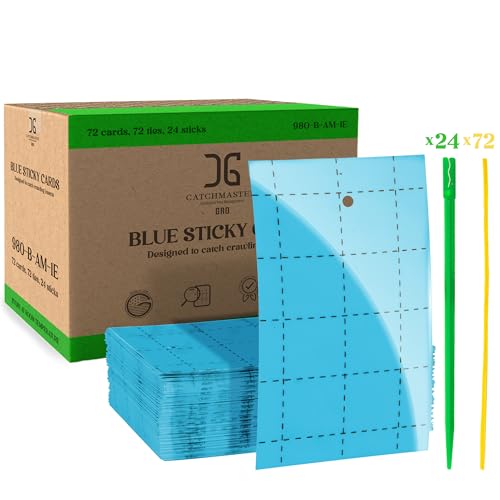
These double-sided traps come ready to use and are designed for long-term placement in homes, farms, gardens, hydroponics, and greenhouses. They protect live plants from a range of pests including thrips and whiteflies, with UV and water resistance for outdoor use. Best for: Gardeners needing an all-around, maintenance-friendly trap suitable for both indoor and outdoor environments.
Why chosen: The multi-use design supports various setups, from walls and pathways to plant stakes, providing flexible placement options.
Caution: Not ideal for use near water features where heavy moisture may reduce adhesive effectiveness over time.
Buying Guide: Thrips Sticky Traps – What To Consider
Thrips sticky traps come in blue and yellow varieties and can be single- or double-sided. Choosing the right type depends on plant size, location, and pest pressure.
- Trap color: Blue traps often attract thrips and some small flying insects more effectively than yellow. Yellow traps attract a broader range of pests like fungus gnats and whiteflies. Match color to target pests when possible.
- Size and fit: Measure pot diameter and plant spacing to select traps that fit without crowding the plant center. Most 6×8 inch or 7.87×3.9 inch formats work well for typical houseplants.
- Adhesive strength: Double-sided traps increase capture area and often perform better in high pest pressure areas. Consider traps with sturdy frames or plastic stakes for stability.
- Placement: Place traps at soil level or near the canopy to intercept adult pests. Use twist ties or stakes to secure traps in place.
- Maintenance: Replace or refresh traps regularly, especially during peak pest seasons. Some products recommend weekly replacements for best results.
- Safety: Look for odorless, non-toxic adhesives when placing traps around kids and pets.
Frequently Asked Questions
- Do thrips sticky traps kill thrips? — No, they capture thrips on contact; they are a monitoring and control aid, not a pesticide.
- Which color is best for thrips? — Blue sticky traps are commonly recommended for catching thrips, though local pest behavior may vary.
- Can I use sticky traps outdoors? — Yes, many traps are designed for outdoor use, weather-permitting; ensure they’re mounted away from direct sun or heavy rain when possible.
- How often should traps be replaced? — Replacement frequency depends on pest pressure and environmental conditions, but weekly checks during peak season are common.
- Are these traps safe for households with children and pets? — Look for odorless adhesives and clearly read packaging; many products are designed to be family-friendly. Place traps where children and pets cannot easily access them if possible.
- Can I use multiple colors of traps at once? — Yes, using both blue and yellow traps can help monitor different pest populations, but avoid overcrowding plants with too many devices.