Answering common buyer questions, these soil sampling tools help gardeners, farmers, and landscapers collect clean, representative soil cores for testing. The best picks are sturdy stainless steel probes with comfortable grips, optional pedal or T-handle designs, and reusable sample bags for easy transfer to labs. This guide highlights five reliable options and explains who each is best for, plus practical buying considerations.
Quick overview of the top picks:
- Lichtund Soil Probe 12 Inch with 2 Bags — best for compact gardens and home lawns
- Sukiise Soil Sample Probe 12 Inch — best for precise soil layers and field tasks
- AUZEKER 12 Inch Soil Sampler Probe — best for repeated lawn and garden use
- HiHydro 12 Inch Stainless Steel Probe — best for quick sampling with two bags
- AUZEKER 40 Inch Soil Sampler Probe — best for tall plants, deep roots, and larger plots
Lichtund 12 Inch Soil Probe With 2 Bags

Best for small to mid-sized lawns and potted plants, this stainless steel probe is designed for durability and rust resistance. The T-handle provides a comfortable grip, and the two reusable bags simplify sampling and transfer to a lab for analysis. The design protects hands with side plugs to prevent injuries when inserting and removing cores.
Who it’s best for: homeowners and light gardeners who want a reliable, easy-to-use tool for regular soil sampling without heavy field gear. Why selected: its compact 12-inch reach covers typical garden depths, while stainless steel construction promises long-term use.
Caution: avoid forcing the probe into very hard soil; for dense clay, pre-softening with moisture can help reduce resistance and improve core integrity.
Sukiise 12 Inch Soil Sample Probe With T Handle
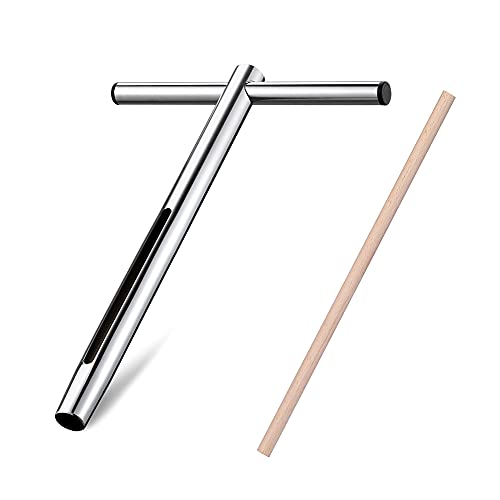
Best for fieldwork and agricultural setups where precise depth control matters, this probe emphasizes ease of extracting soil cores while preserving soil layering. It supports rapid field sampling and can handle clay to loamy soils with a sharp tip and a 12-inch length. The disassembled T-handle aids transport and storage, and the tool helps to observe soil profiles efficiently.
Who it’s best for: agronomists and farmers needing dependable core samples with clear layer integrity. Why selected: specialized structure in the tube tip reduces clogging and maintains original soil layers for accurate lab evaluation.
Caution: the compact packaging may require careful reassembly; ensure all components are secured before transport to prevent loss of parts.
AUZEKER 12 Inch Soil Sampler Probe
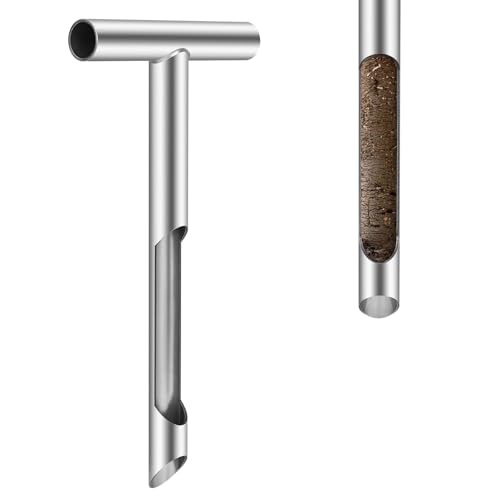
Best for repeat-use in lawns, gardens, and small farms, this stainless steel probe emphasizes accuracy and durability. The ergonomic T-handle enhances leverage and control, enabling efficient manual sampling. It is designed to produce clean cores suitable for consistent soil testing and monitoring over time.
Who it’s best for: landscapers and home gardeners seeking a robust, easy-to-operate probe for routine soil testing. Why selected: solid construction and comfortable grip support frequent use without fatigue.
Caution: avoid over-tightening or bending the handle under extreme leverage, which could affect alignment over time.
AUZEKER 40 Inch Soil Sampler Probe

Best for deeper soil profiles and larger plots, this longer probe reaches beyond standard 12-inch tools to collect deeper cores. The stainless steel construction and included pedal-style assistance under the T-handle help reduce bending and strain during deeper sampling. It also includes two reusable bags for convenient transfer to testing labs.
Who it’s best for: professionals managing larger lawns, farms, or garden beds with deeper soil layers. Why selected: extended length enables deeper core sampling and better representation of subsoil conditions.
Caution: longer tools require more space and careful handling to avoid bending or striking nearby plants while inserting the core.
Buying Guide: Key Considerations For Choosing A Soil Sampler
- Length and reach: Choose a length that matches typical soil depths you test. Shorter probes are great for home gardens; longer probes are better for lawns and farms with deeper layers.
- Material quality: Stainless steel offers durability and corrosion resistance. Look for a solid rod, smooth edges, and reliable joints to prevent bending or cracking.
- Grip and ergonomics: T-handles provide leverage, while pedal-assisted designs reduce bending. A comfortable grip reduces user fatigue during repeated sampling.
- Core integrity: A sharp tip preserves soil layers and prevents mixing. A tapered tube supports clean extraction and reduces soil compaction at the core site.
- Sample bags: Reusable bags help with direct transfer to labs and maintain a visible soil profile. Transparent bags improve inspection before testing.
- Portability: Disassemblable handles and compact dimensions ease transport and storage, especially for field work.
- Maintenance: Stainless steel is easier to clean and less prone to rust. Check whether parts require lubrication or drying before storage.
Practical buying tips and use-case scenarios
- Home gardens: A 12-inch probe with two reusable bags provides quick, reliable cores for nutrient testing and amendment planning. Ideal for routine soil checks in soil with moderate depth.
- Lawns and mid-size landscapes: A 12-inch or 35–40 inch probe with an ergonomic grip balances depth needs with ease of use across larger areas.
- Field testing and farming: Longer probes reduce the need for repeated repositioning. Look for depth-focused designs and robust construction for repeated use.
Frequently asked questions
- What length should I choose for residential use? A 12-inch probe is typically sufficient for home gardens and containers, while deeper beds may benefit from longer options.
- Is stainless steel necessary? Stainless steel offers durability and corrosion resistance, which is advantageous for repeated sampling and outdoor use.
- Should I get bags with the probe? Reusable bags help keep samples organized and enable easier transfer to labs for analysis.
- Can I use a garden tool to take soil samples? A purpose-built soil probe ensures cleaner cores and preserves soil layers better than improvised tools.
- Is a pedal or T-handle better? Pedal-assisted designs reduce bending strain, while T-handles enhance grip. Choose based on comfort and testing frequency.
- How do I maintain the probe? Clean after use, dry to prevent rust, and store with minimal moisture to prolong life.