Direct answer: choosing a tomato-specific watering system helps maintain consistent soil moisture, reduces runoff, and supports steady fruiting. This guide covers top options for different setups—from simple spikes to full drip kits—so you can pick the right fit for containers, raised beds, or garden beds. Ideal buyers include busy gardeners, frequent travelers, and DIY enthusiasts who want reliable, low-maintenance irrigation without manual daily watering.
Summary table of selected products:
| Product | Best For | Key Benefit |
|---|---|---|
| Plant Watering Devices 6 Pack Terracotta Vacation Plant Waterer (REMIAWY) | Travelers and budget-conscious buyers | Slow-release water from terracotta spikes; set-and-forget irrigation |
| Back to the Roots Self-Watering Terracotta Olla Pot (Pack of 3) | Gardeners needing week-long support | 700 mL capacity provides approx. 1 week of moisture |
| HolyMaji Tomato Watering Ring | Precise root-zone irrigation | Red tray targets root watering; reduces runoff |
| Self Plant Watering Spikes 12 Pack (Mangoit) | Indoor plants and small setups | Adjustable control and travel-friendly |
| MixC Drip Irrigation System Kit (230 ft) | Comprehensive garden irrigation | Broad coverage with quick-connect tubing |
Plant Watering Devices 6 Pack Terracotta Spikes
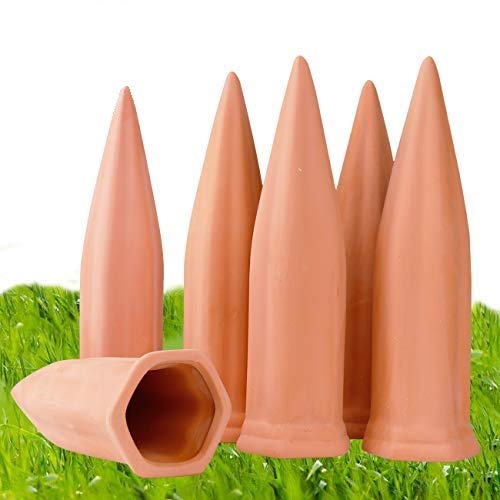
Best for: budget-conscious gardeners and small setups with spare wine or plastic bottles.
What it is: a six-pack of terracotta watering spikes designed to release water slowly into the soil. The spikes work best when inserted into soil and paired with filled bottles turned upside down. The system relies on terracotta porosity to regulate flow, so thinner spikes drain faster. The package emphasizes a cost-effective solution for multiple plants.
Why selected: ideal for households that want a low-cost, scalable solution to keep several tomato plants hydrated during short trips or busy periods. The 6-pack offers good value and easy deployment with common bottle sizes.
Limitations: terracotta is fragile during shipping; some spikes may arrive with minor breaks. In that case, Remiawy provides support. Also, performance depends on bottle size and soil conditions; heavier bottles may require deeper insertion to avoid tipping or breakage.
Back to the Roots Self-Watering Terracotta Olla Pot (Pack of 3)

Best for: gardeners needing extended moisture between fills, especially for two large tomato plants.
What it is: a terracotta pot-based system with a 700 mL capacity. Designed to provide approximately one week of precise watering, it uses the soil-contact of the pot to slowly release water. The 18-inch diameter coverage supports larger plantings and reduces the need for daily watering on weekends or holidays.
Why selected: the combination of a sizeable reservoir and a weather-proof design makes it suitable for weekdays away and weekend trips. It is a compact, passive solution that reduces manual irrigation needs.
Limitations: it requires anchoring and proper soil contact to perform as advertised; if the soil is very dry or extremely porous, water release rates may vary more than expected.
HolyMaji Tomato Watering Ring

Best for: tomatoes in beds or large containers where root-zone irrigation is preferred.
What it is: a red tomato halo/tray designed to channel water directly to the root zone, reducing surface runoff and promoting deeper root growth. The package highlights rapid-stake mounting and a sturdy PET construction that resists tearing and UV damage for longer seasons.
Why selected: the direct-root watering approach aligns with tomato growth patterns, where consistent moisture at the root zone supports steady fruiting and reduces disease risk related to wet foliage.
Limitations: made from PET, which may degrade more slowly under intense sun; ensure proper placement to avoid water pooling in non-root areas.
Self Plant Watering Spikes 12 Pack (Mangoit)

Best for: indoor plants and compact garden setups where travel needs are common.
What it is: a 12-pack of self-watering spikes with adjustable control, designed to fit typical beverage bottles with a 1.1-inch mouth. It’s aimed at indoor use and small containers, delivering steady moisture when away from home.
Why selected: suitable for travelers or office setups where consistent indoor irrigation is needed without complex equipment. The adjustable valve helps tailor watering to different plant demands.
Limitations: not ideal for large outdoor plants or heavy planters; two or more may be needed for bigger pots to maintain uniform moisture.
MIXC 1/4″ 100Ft Drip Irrigation System Kit

Best for: larger gardens or multiple plant zones needing a comprehensive irrigation plan.
What it is: a full drip irrigation system kit featuring universal 1/4-inch components, 2-way and 3-way connectors, copper 360° nozzles, and quick-connect tubing. The kit is designed for flexible layout and scalable coverage across beds, pots, and greenhouses.
Why selected: offers a complete solution for those who want to install a centralized irrigation system with adjustable water distribution and expandability up to many emitters.
Limitations: initial setup requires planning and some DIY work to route tubing; ensure compatibility with your water source and garden layout.
Buying Guide
What to consider when choosing a tomato watering system
- Plant size and spacing: Larger tomato plants or dense beds benefit from systems with higher water capacity or broader coverage.
- Watering method: Spikes and ollas provide slow, deep watering; drip kits offer precise, scalable distribution. Choose based on whether you want passive or configurable irrigation.
- Ease of use: For travelers, spike-based or self-watering spikes packages are simple. For ambitious setups, a full drip kit gives maximum control.
- Soil type and drainage: Well-draining soil may require more frequent but smaller water releases; heavy soil benefits from slower, controlled delivery to prevent waterlogging.
- Materials and durability: Terracotta offers natural porosity but can be fragile; PET rings and high-quality plastics improve longevity in sun-exposed areas.
- Maintenance needs: Some systems require regular bottle filling or refilling, while others are designed for longer periods between interventions.
How to set up a tomato watering system
- Assess your garden layout: determine beds, containers, or a mix where irrigation will run.
- Choose a suitable system: pick a spike-based option for simplicity or a drip kit for full customization.
- Prepare water sources: ensure bottles or reservoirs are accessible and sized for your setup.
- Position emitters near root zones: avoid spray on foliage to reduce disease risk.
- Test and adjust: run a test cycle to observe flow rates and correct as needed.
Maintenance tips for consistent results
- Check for blockages in tubes and emitters; clean or replace clogged parts.
- Monitor soil moisture to fine-tune watering intervals and avoid overwatering.
- Seasonal adjustments: increase watering during hot spells and reduce during cooler periods.
FAQ
- Q: Which system is best for traveling gardeners? A: Self-watering spikes or small reservoir-based options are easiest to leave unattended for several days.
- Q: Can I mix different systems in the same garden? A: Yes, but plan layouts to avoid interference and ensure uniform moisture delivery.
- Q: Do these systems work for raised beds? A: Yes, most spike-and-drip options are suitable for raised beds with proper placement near root zones.
- Q: How long do reservoirs last between refills? A: It depends on plant load, soil type, and climate; larger reservoirs extend intervals between fills.
- Q: Are there any risks of overwatering with these systems? A: Overwatering can occur if a system delivers too much water in one area; use moisture checks and adjustable valves to prevent it.
- Q: Do these kits require professional installation? A: Most are designed for DIY setup, though some larger systems may benefit from careful planning and review.